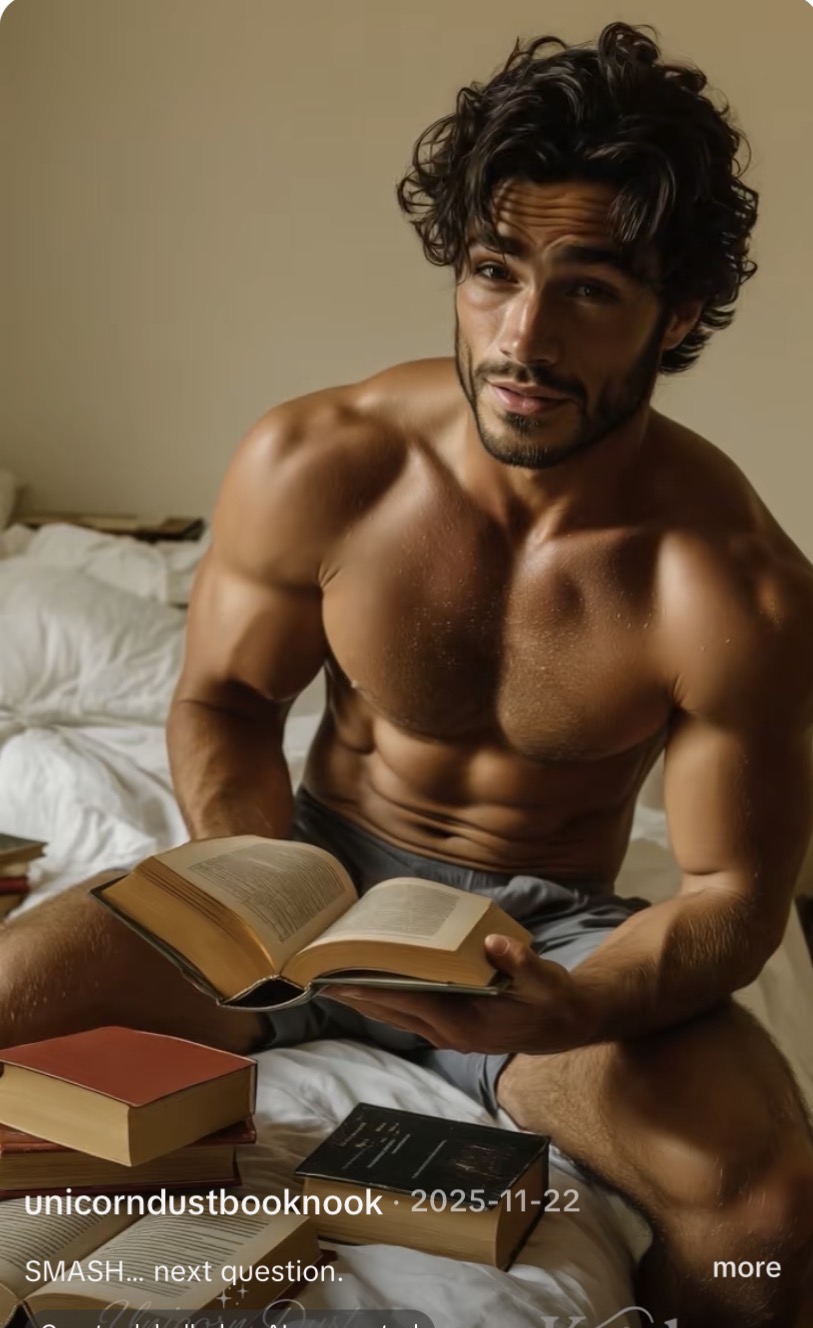
Alexander Larman, books editor of The Spectator, has declared it's time to turn the page on romantasy. He finds the genre — fantasy novels threaded with explicit romance, ancient fae lords, dragon bonds, and the kind of singular devotion that real men tend to find baffling — to be “indifferently written and repetitive exercises in wish fulfillment.” Then he retreats, presumably, to Evelyn Waugh, Martin Amis, and Philip Larkin. Three men. No further comment required.
But here's what Larman doesn't ask, and what nobody seems to be asking: if romantasy is wish fulfillment, what exactly is the wish?
I write romantasy. I also have an Arts PhD, which I mention not to impress but to signal that I've read enough to recognise when a cultural phenomenon is doing something more interesting than it looks. And romantasy — at this scale, with these readers, at this particular cultural moment — is doing something interesting.
The genre has a template. A young woman, usually overlooked, encounters a male figure of extraordinary power: ancient, often not-quite-human, occasionally bonded to something vast and dangerous. He is, invariably, completely focused on her. He sees her when no one else does. He directs all that terrible, godlike force toward her wellbeing. He remembers what she said three weeks ago. He notices.
Strip away the fae kingdoms and the dragon bonds and you're left with a fantasy that is, at its core, almost embarrassingly modest: a partner who pays attention. Who carries the cognitive and emotional weight of a shared life without being asked. Who shows up — not occasionally and dramatically, but consistently, in the small moments that make up the texture of a life. Women aren't dreaming of gods. They're dreaming of someone who will share the mental load without it being a favour they're owed.
Larman calls this wish fulfillment like it's a flaw. I'd call it a symptom.
Because here's what's coming, and it should concern us far more than a pink bookshop in Oxford.
The romantasy hero's defining quality — total attention, perfect attunement, singular focus — is precisely what AI companion apps are now delivering. A growing ecosystem of digital partners designed to remember everything, notice everything, and never be too tired or too absorbed in their own inner lives to be present. They don't forget. They don't leave the emotional labour sitting on the bench until someone else picks it up.
This isn't a fringe phenomenon. It's a market, and it's growing because it is filling a real gap — the same gap that romantasy has been mapping in fiction for a decade. Human bonding systems don't discriminate particularly well between a responsive partner and a sufficiently responsive simulation. The attachment forms regardless. What gets lost in the exchange is friction, complexity, and the irreplaceable reality of two full human beings building something together.
That's worth grieving. It's also worth preventing.
The response to romantasy shouldn't be Larman's literary snobbery, and it shouldn't be the reflexive defence that it's empowering because women wrote it. Both miss the point. The better question is what the genre, at its best, is actually modelling.
Because the romantasy worth writing — and reading — isn't about finding the perfect man who finally sees you. It's about a woman coming into herself. The love interest is a catalyst, not a solution. The recognition she's been waiting for turns out to be her own. That's the story audiences are hungry for, even when they don't quite know it picking up the book.
But there's a challenge in here for real men, too. Not a threat — a genuine question.
The romantasy hero is impossible not because he's immortal, or because he can summon lightning, or because he looks like that. He's impossible because he shows up, pays attention, and takes responsibility for half of everything — including the invisible, exhausting minutiae of a shared life. We don't expect the impossible — not even the legendary. But we'd love it if you joined us in bearing the brunt of this crazy challenge we call existence.
That's the real heroic journey. That's the fantasy. Not the wings.
Oh, and if you want any pointers about what your lady wants in bed, read what she's reading. It's okay to skip ahead to the good stuff.
So here's the offer: take responsibility for half the chores and half the choices. Stand with us, shoulder to shoulder, in this messy glorious adventure called life.
The alternative is that an algorithm beats you to it.
Just like the fae lord, it'll never forget how she likes it in bed.
The Anamnesis Trilogy is a dark romantasy about power, memory, and the architecture of the self. Book One is coming soon. Join the newsletter for early excerpts and craft notes.
Join the Newsletter